The Power Bank Test: Which Ones Keep Their Capacity After a Year?
Advertised capacity and delivered capacity are different numbers. We cycled twelve power banks 300 times to see which ones stayed honest.
By Marcus Bell9 min read
On this page
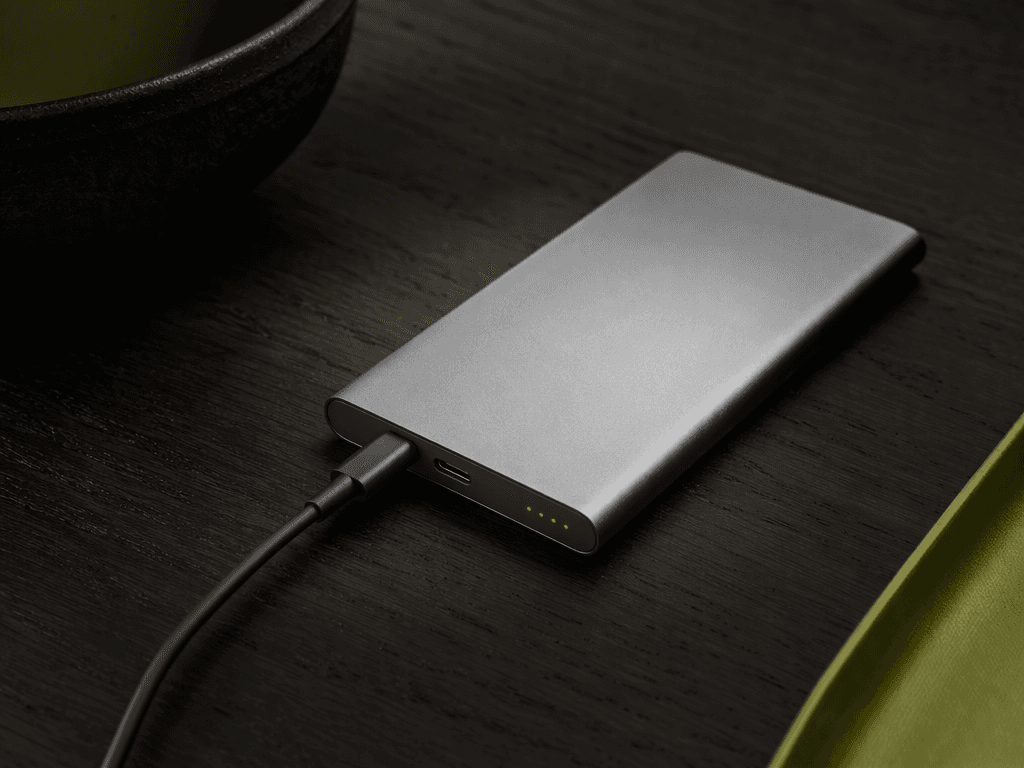
Every power bank makes the same promise on the box: ten thousand, twenty thousand, twenty-seven thousand milliamp-hours. Almost none of them deliver it, and — this is the part the industry hopes you never check — almost none of them are lying. The gap between advertised and delivered capacity is a story about voltage conversion, honest labeling, and a handful of banks that stay truer than the rest. We cycled twelve popular models three hundred times each to find out which ones keep their word.
Our test rig is simple and unforgiving: a calibrated USB power meter, a constant two-amp draw, and a spreadsheet. Three hundred full cycles approximates two to three years of daily carry. We measured what each bank delivered on day one, and what it still delivered on day three hundred.
Why 10,000 Becomes 6,000
The headline number is the capacity of the cells inside, measured at 3.7 volts. Your phone charges at 5 volts or higher, and the conversion costs energy — typically fifteen to twenty percent, plus another few points for the cable and the phone's own charging circuitry. An honest 10,000 milliamp-hour bank therefore delivers around 6,500 to 7,000 to your phone, and that is before any aging. Banks advertising inflated conversion efficiency are not better engineered; they are better at arithmetic you are not meant to do.
Two of the twelve banks in our test shipped cells so poor they delivered under fifty-five percent of rated capacity on day one — effectively a 5,000 milliamp-hour bank in a 10,000 box. Both were marketplace brands with six-syllable names. Neither survived our cycle count with dignity.
What Three Hundred Cycles Revealed
Quality showed up in the slope. The best banks in our test — those from established manufacturers with proper cell sourcing — lost six to nine percent of capacity over the full cycle count, essentially indistinguishable from new. The worst lost a third. The pattern was consistent enough to be a rule: the premium you pay for a name-brand bank is not a logo tax. It is a chemistry tax, and it buys the difference between a bank that ages and one that just shrinks.
How to Buy a Bank That Lasts
Three rules survive every test we run. Buy from manufacturers that name their cell suppliers. Treat any capacity claim above twenty thousand milliamp-hours in a pocketable shell as fiction. And ignore the LED dot display — the four-segment bar is less precise but far more durable, and precision you cannot trust is worse than none. The right bank is boring, slightly heavier than its rivals, and still honest in year three. That is the entire product category, distilled.
Written by
Marcus Bell
Buying Guides Writer
Marcus tests the gear that promises the most for the least. If a product claims a number, he measures it, cycles it, and reports back honestly.