Your Smart Speaker Heard More Than You Think Last Year
Voice assistants reshaped how we search, cook, and argue in the kitchen. We looked at what we actually say to them — and what happens to it afterwards.
By Tom Okafor8 min read
On this page
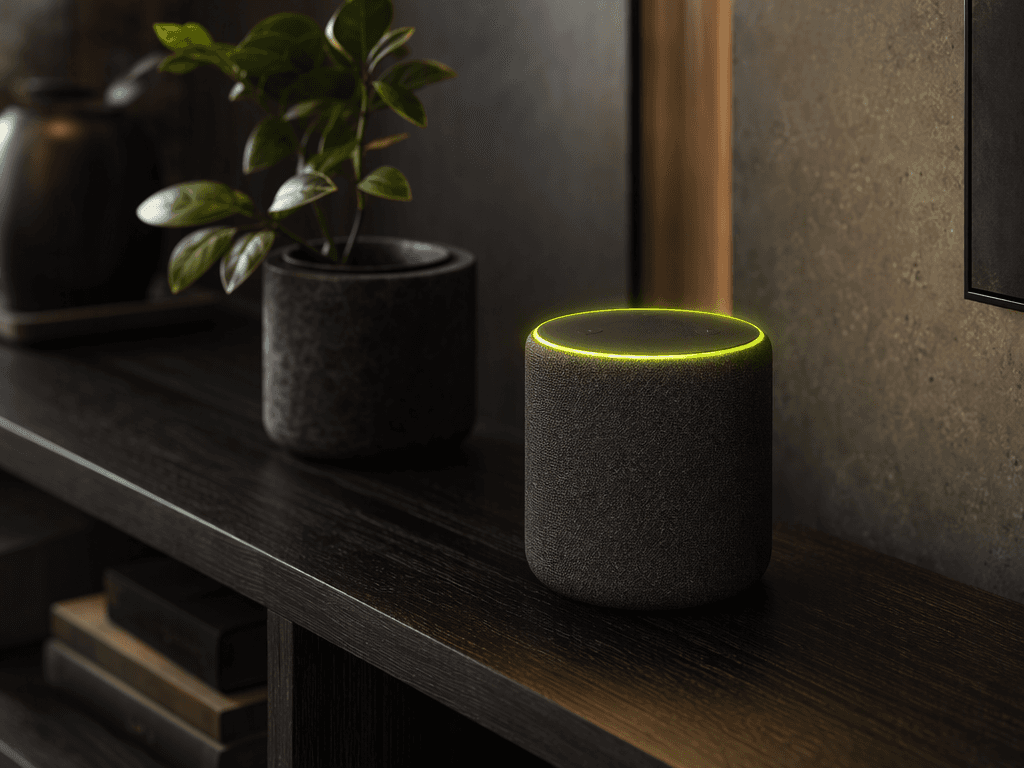
The smart speaker earned its place in the kitchen the honest way: timers, weather, and a radio station without greasy fingers on a screen. It also earned something its owners rarely review — a year-round microphone habit. We audited a household year of voice assistant history: what was actually recorded, what was kept, and what the delete button really deletes. The answers were more reasonable than the headlines suggest, and stranger than the marketing implies.
Our method was simple. We exported twelve months of voice history from the two major assistants, read all of it, and compared the archive against what the apps said was stored. Everything below comes from that archive and the platforms' own privacy dashboards.
What the Archive Showed
The raw count was lower than expected — a few hundred stored interactions across a full year of daily use. The vast majority were legitimate wake-word events: timers, music requests, and the occasional midnight query about whether the dishwasher sound was normal. But mixed in were the known failure mode of the category: false wakes. A cartoon character's name, a phrase in a podcast, and one heated board-game dispute all triggered recordings nobody intended. Each was a few seconds long, but each was also uploaded, transcribed, and stored.
Here is the part that deserves more attention than it gets. The assistant keeps a persistent log of your household's routines — lights, locks, thermostats, waking hours — and that behavioral profile is more valuable than any single recording. The recordings prove what you said. The routines predict what you will do. Privacy settings address the first and largely ignore the second.
The Delete Button Fine Print
Both major platforms now offer voice-history deletion, and both work as advertised — for the history. Deleting recordings does not delete the derived data: the voice model already trained on your accent, the routine graph already built around your evenings. The dashboards are honest about this if you read the full policy, which, to be fair to the platforms, is more than most owners do. The controls exist. They are simply a floor, not a finish line.
Sensible House Rules
You do not have to choose between the kitchen timer and your privacy — you just have to spend fifteen minutes once. Set recordings to auto-delete after three months rather than keeping them indefinitely. Review and delete false-wake snippets monthly; the apps make this genuinely easy. Keep the speaker out of the bedroom, where the false-wake problem becomes a real one. And once a year, run the export we ran. The archive is the only version of the story the company cannot summarize for you.
Written by
Tom Okafor
Repair & Privacy Writer
Tom writes about what devices do when you're not looking — and what you can do about it. He is Cobravolt's resident skeptic about anything that phones home.